
Industrial Covers
Heavy Duty Equipment Covers for UK Warehouses Guide
The Complete Guide to Heavy-Duty Equipment Covers for UK Warehouses Unprotected machines cost more to maintain and fail sooner. Here is everything UK warehouse and
UK Based·2–5 Year Warranty·Ships Across Europe
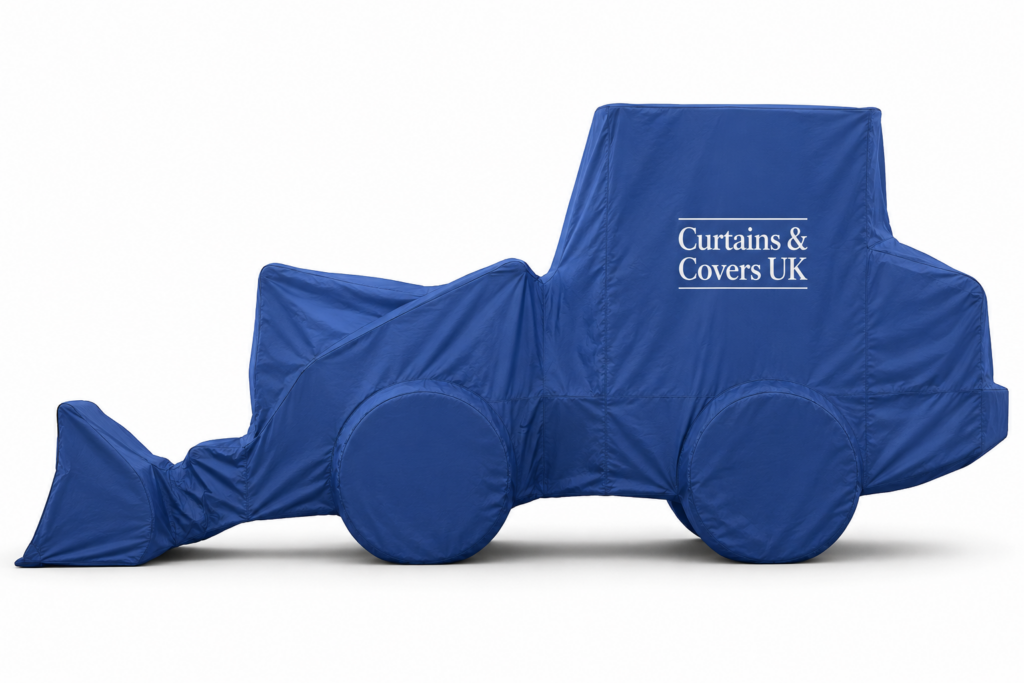
The Complete Guide to Heavy-Duty Equipment Covers for UK Warehouses
Unprotected machines cost more to maintain and fail sooner. Here is everything UK warehouse and facilities managers need to know about heavy duty equipment covers.
Walk through most UK warehouses and you will see machines and equipment left uncovered when not in use. Forklifts parked overnight with no protection. CNC machines sitting through a weekend with dust settling into every crevice. Pallet handling equipment stored against an open loading bay door in all weathers.
It is a common situation and an expensive one. Dust, moisture, temperature changes, and physical debris all work against mechanical and electrical equipment over time. The costs show up gradually in the maintenance budget before they show up as a breakdown on the production floor. Heavy duty equipment covers are one of the most straightforward and cost effective ways to reduce those costs.
UK warehouses face a specific set of environmental challenges that make equipment protection more important than in many other parts of the world.
Each of these factors accelerates wear on equipment that is left uncovered. A heavy duty machine cover addresses all of them by creating a physical barrier between the equipment and its environment during every period of inactivity.
The material a warehouse equipment cover is made from determines how well it handles the specific conditions in your facility. There are two main options used in the UK:
For equipment that sits near open loading bays, is subject to water from cleaning processes, or operates in environments with chemical exposure, PVC vinyl is the stronger choice. For equipment in dry indoor settings where dust is the primary concern, heavy duty polyester is practical and cost effective.
Heavy duty covers can be made for almost any warehouse equipment. The most common applications in UK facilities include:
Equipment in a warehouse environment rarely comes in standard sizes. A forklift from one manufacturer will have different dimensions from one by another. A CNC machine with a specific configuration may have protrusions, control panels, or access points that a generic cover cannot accommodate.
A cover that does not fit correctly creates its own problems in a warehouse setting:
Made to measure equipment covers are built to the exact profile of each machine. For equipment with unusual shapes, access panels that need to remain reachable, or components that protrude from the main body, specific features can be incorporated including zipper splits for access, Velcro panels at control points, reinforced edges at high wear areas, and ventilation panels where heat needs to escape.
Ordering heavy duty equipment covers for a warehouse is straightforward when you have the right information ready:
Heavy duty equipment covers are a low cost protective measure relative to the value of the equipment they protect and the maintenance costs they help prevent. A single unplanned service call on a forklift or CNC machine typically costs many times the price of a cover that would have prevented the problem.
Beyond individual repair costs, equipment that is consistently well maintained stays in service longer. Replacing warehouse equipment ahead of its expected lifespan because of preventable wear is one of the most avoidable costs in any UK facility. Covers do not eliminate maintenance but they meaningfully reduce the rate at which equipment degrades between service intervals.
Heavy duty equipment covers are one of the simplest and most cost effective protective measures available to UK warehouse and facilities managers. The right cover, made to the correct dimensions and specification for your equipment and environment, reduces dust ingress, prevents moisture damage, and extends the service life of machinery that would otherwise sit unprotected during every idle period. If your facility has equipment that is regularly left uncovered when not in use, the case for change is straightforward. The cost of a good cover is a fraction of the maintenance and replacement costs it prevents.
Order heavy duty equipment covers built to your exact dimensions at Curtains & Covers.
Request a free quote today.
The Complete Guide to Heavy-Duty Equipment Covers for UK Warehouses Unprotected machines cost more to maintain and fail sooner. Here is everything UK warehouse and

There are hundreds of outdoor furniture covers on the market. Most of them are not worth your money. Here is how to find the ones

Typically replies within a minute.