
Custom Covers
Tennis Court Cover: Complete UK Buying Guide 2026
Your tennis court is a significant investment. Leaving it unprotected from the British weather is one of the most expensive mistakes a club or homeowner
UK Based·2–5 Year Warranty·Ships Across Europe
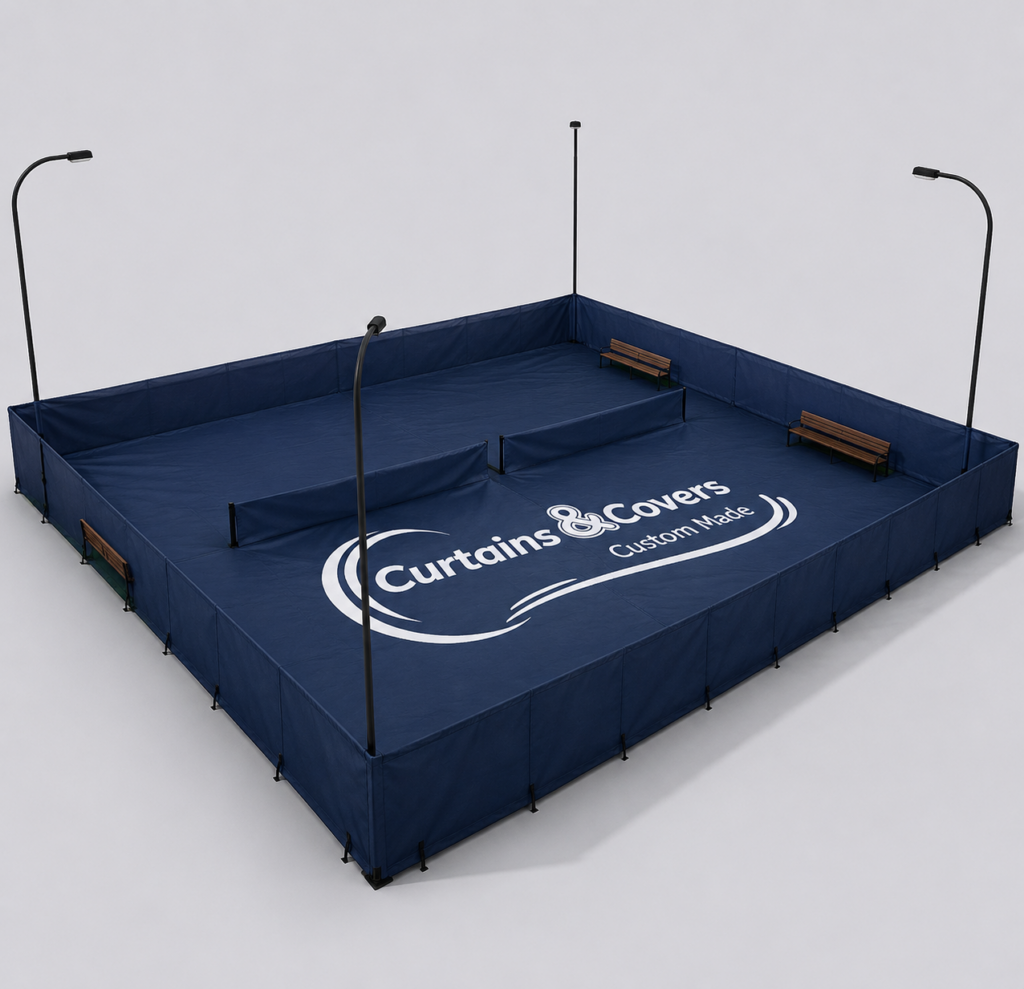
Your tennis court is a significant investment. Leaving it unprotected from the British weather is one of the most expensive mistakes a club or homeowner can make.
Tennis courts in the UK face a relentless cycle of wet weather, UV exposure, frost, and leaf debris throughout the year. A quality tennis court cover is not a luxury. It is a necessity for any court that needs to remain playable, safe, and in good condition season after season.
This guide covers everything you need to know before ordering your court cover, including materials, sizing, securing options, and why made to measure is almost always the right choice for UK courts.
British weather is notoriously unpredictable. Even in summer, a court can receive heavy rain that leaves puddles for hours. Without a cover, standing water penetrates surface coatings, softens the base, and creates slippery conditions that make the court unsafe to use. Over time, UV exposure fades court markings and weakens synthetic surfaces, leading to expensive resurfacing work long before it should be necessary.
A proper tennis court protection cover addresses all of these issues:
There are several types of court cover used across the UK, each suited to different budgets and requirements:
1. Flat ground covers: These lie directly on the court surface and provide basic weather protection. They are the most affordable option and the most common for club and school courts
2. Debris covers: Made from breathable geotextile material, these allow the court surface to breathe while keeping leaves, rain, and frost off the playing area
3. Waterproof PVC covers: Heavy duty covers made from PVC coated vinyl that provide the highest level of waterproofing. Ideal for courts in exposed locations or those used for high level competition
4. Inflatable dome covers: Used at professional venues, these inflate to form a raised dome over the entire court. They allow play to continue in wet conditions but are significantly more expensive
For most clubs, schools, and private court owners in the UK, a flat waterproof cover made from heavy duty PVC or breathable geotextile is the practical and cost effective choice.
Tennis courts are not always the same size. Regulation singles courts, doubles courts, and recreational courts all have different dimensions. Even regulation courts vary slightly from one installation to the next. A standard size cover that is too wide will collect water in pooled areas and blow around in wind. One that is too short will leave part of the court exposed.
A made to measure court cover is cut to the exact dimensions of your court. It lays flat, sheds water cleanly to the edges, and stays in place because there is no excess material to catch the wind. For courts with unusual dimensions or those that include run off areas, a custom cover is the only option that will provide complete protection.
Materials and Weights Explained:
1. PVC coated polyester at 1000 denier: The standard for heavy duty court covers. Waterproof, UV resistant, and durable enough for year round outdoor use in the UK
2. Geotextile at 150gsm: A breathable option that allows moisture to pass through from beneath while blocking rain from above. Good for grass courts where surface health is important
3. Woven polyethylene: A lighter and more affordable option that provides basic protection for courts in sheltered locations
Many UK buyers search for a tennis court cover near me hoping to find a local supplier. The good news is that most quality court covers are made to order and delivered directly to your location, which means geography matters less than you might think. What matters is finding a supplier who produces covers to your exact dimensions, uses appropriate materials for your court type and location, and backs the product with a meaningful warranty.
A tennis court cover is one of the most straightforward and cost effective ways to protect a significant sports facility investment. Whether you manage a sports club, a school facility, or a private court, the right cover extends court life, reduces maintenance costs, and keeps the surface safe and playable throughout the year. For most UK courts, a made to measure waterproof PVC cover built to your exact dimensions is the most reliable long term solution.
Q1. How do I measure my tennis court for a cover?
Measure the full length and width of the area you want to cover, including any run off zones around the baseline and sidelines. Add 30 to 50 centimetres on each side if you want the cover to overlap the court edge for extra protection.
Q2. How long does a tennis court cover last?
A quality PVC coated court cover will last between 5 and 10 years with proper care. Breathable geotextile covers typically last 3 to 5 years depending on the level of UV exposure and how they are stored when not in use.
Q3. Can one cover protect the whole court?
Yes. Court covers are available in single piece designs that cover the full court area, or in multi section designs that overlap in the centre. Single piece covers provide better waterproofing but are heavier to handle.
Q4. Do I need a cover for an indoor court?
Indoor courts do not need weather protection but debris covers can still help maintain surface cleanliness between sessions, particularly in courts that are also used for other sports.
Q5. How do I secure a tennis court cover in wind?
Most covers use weighted chain edges, brass grommets with anchor stakes, or heavy duty tie downs at regular intervals around the perimeter. For exposed courts in high wind areas, a weighted chain hem is the most reliable securing method.
Your tennis court is a significant investment. Leaving it unprotected from the British weather is one of the most expensive mistakes a club or homeowner

The Complete Guide to Heavy-Duty Equipment Covers for UK Warehouses Unprotected machines cost more to maintain and fail sooner. Here is everything UK warehouse and

Typically replies within a minute.